
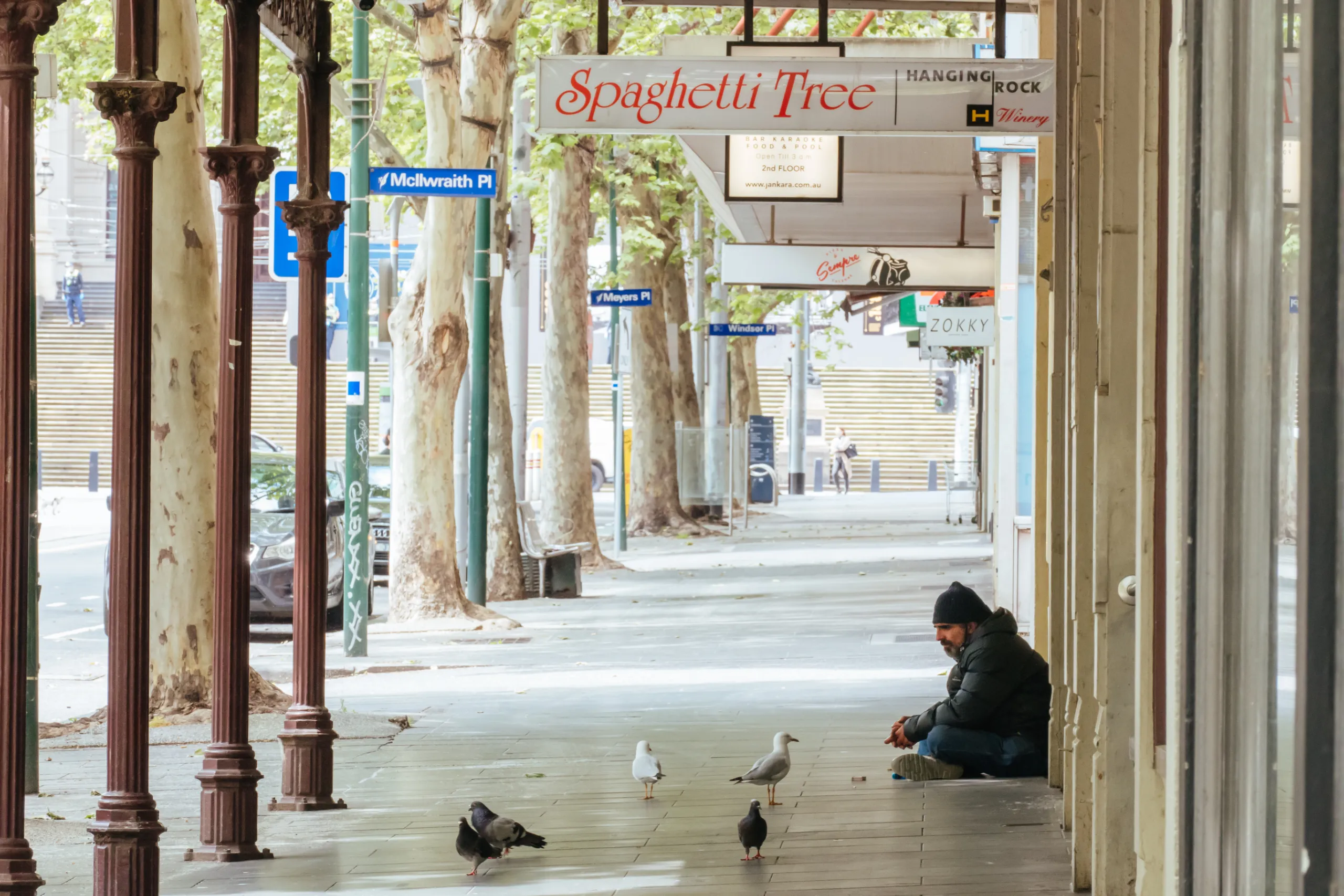
It is a national embarrassment that in a previously prosperous state like Victoria, more than 30,000 people experience homelessness on any given night: rough sleepers, people living in cars, sheds, and rooming houses, and families couch-surfing between relatives. Rough sleeping has risen in nearly every region, and the state’s priority social housing waitlist now exceeds 40,000 households, with total applications around 70,000. Social housing makes up only about 3% of all dwellings statewide, the lowest share in Australia, while 35% of renters are in rental stress, well above the national average. Short-stay rentals that once competed with long-term tenants on the coast are now doing the same in inner Melbourne. The state’s social housing programs promised tens of thousands of new homes but have delivered only a fraction of what is needed to match demand. Meanwhile the 7.5% short-stay levy raises around $75–87 million a year, with 75% reserved for metropolitan Melbourne and no published breakdown of where it actually goes. The result is visible every night in the CBD and across our state: people squatting on streets, on foreshores, and in parks because there is nowhere else to go. That ends under One Nation.
What we will do
-
Create enough crisis, transitional, and temporary places so no one is forced to sleep rough. Fund dedicated beds in every region, including for women and children escaping family violence. Deploy modular units and pods on surplus Crown and council land with clear exit pathways. Resource the By-Name List statewide and connect every person to a genuine offer of housing or support.
-
Make squatting and camping in the CBD and other high-visibility public areas not an option. Enforce clear no-camping and no-encampment rules and use existing move-on powers consistently, but only after outreach workers have offered a place. The standard is simple: no one camps in the CBD because everyone has somewhere else to go.
-
Run a statewide landlord trial with land tax exemptions for willing landlords who lease suitable homes, including short-stay properties, to the state or community housing providers for 12-month tenancies. This is roughly one-third the cost of motel accommodation and creates immediate stock.
-
Redirect short-stay levy revenue into local homelessness programs with full public reporting, and secure published Homes Victoria allocations for every region based on local need. Build a pipeline of 1- and 2-bedroom social and affordable homes for singles, over-55s, and women leaving violence.
-
Establish a housing-to-work pathway linked to the By-Name List. Once someone is housed, local NGOs and community housing providers connect them to job-ready programs, apprenticeships, and employers who have agreed to take on people exiting homelessness.
-
Run an employer incentive trial: a wage subsidy or payroll-tax offset for the first 6 to 12 months for businesses hiring someone who was on the By-Name List or in crisis accommodation, administered through existing local employment networks.
-
Create dedicated state-government entry-level roles for people exiting homelessness, starting with positions in parks maintenance, cleaning, and facilities services where the work itself helps keep public spaces clear and well maintained. Pair each role with mentoring and a pathway to ongoing employment.
-
Create enough crisis, transitional, and temporary places so no one is forced to sleep rough. Fund dedicated beds in every region, including for women and children escaping family violence. Deploy modular units and pods on surplus Crown and council land with clear exit pathways. Resource the By-Name List statewide and connect every person to a genuine offer of housing or support.
-
Make squatting and camping in the CBD and other high-visibility public areas not an option. Enforce clear no-camping and no-encampment rules and use existing move-on powers consistently, but only after outreach workers have offered a place. The standard is simple: no one camps in the CBD because everyone has somewhere else to go.
-
Run a statewide landlord trial with land tax exemptions for willing landlords who lease suitable homes, including short-stay properties, to the state or community housing providers for 12-month tenancies. This is roughly one-third the cost of motel accommodation and creates immediate stock.
-
Redirect short-stay levy revenue into local homelessness programs with full public reporting, and secure published Homes Victoria allocations for every region based on local need. Build a pipeline of 1- and 2-bedroom social and affordable homes for singles, over-55s, and women leaving violence.
-
Establish a housing-to-work pathway linked to the By-Name List. Once someone is housed, local NGOs and community housing providers connect them to job-ready programs, apprenticeships, and employers who have agreed to take on people exiting homelessness.
-
Run an employer incentive trial: a wage subsidy or payroll-tax offset for the first 6 to 12 months for businesses hiring someone who was on the By-Name List or in crisis accommodation, administered through existing local employment networks.
-
Create dedicated state-government entry-level roles for people exiting homelessness, starting with positions in parks maintenance, cleaning, and facilities services where the work itself helps keep public spaces clear and well maintained. Pair each role with mentoring and a pathway to ongoing employment.